
Peter Newmark argued that most texts are best served by communicative translation rather than a semantic one. He believed that communicative translation is more appropriate for non-literary texts—such as textbooks, technical manuals, reports, instructions, advertisements, propaganda, and popular fiction—because the goal is to convey information clearly and effectively to the reader, adapting the message to the linguistic and cultural expectations of the target audience.
In contrast, semantic translation should be applied to texts in which the form, style, and linguistic choices of the original author carry as much weight as the content itself. These include literary works, historical speeches, personal correspondence, diaries, and autobiographies—genres in which tone, nuance, and authorial voice are central to the meaning. For Newmark, texts of this kind demand a close rendering of the lexical and grammatical structure of the source language. He famously stated: ‘Any important statement requires a version as close to the original lexical and grammatical structure as is obtainable’ (1981, p. 44).
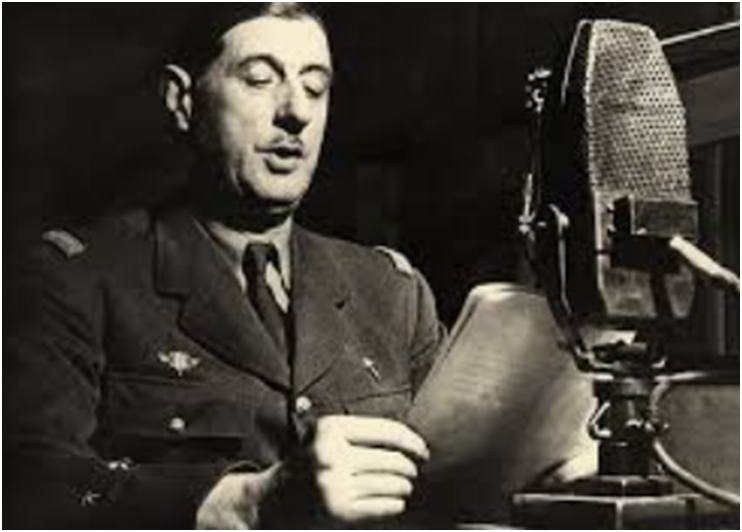
Charles de Gaulle’s radio broadcast
As an example, Newmark cites Charles de Gaulle’s historic radio broadcast of 18 June 1940, a key moment in modern European history. According to Peter Newmark, a speech of such political and emotional significance must be translated semantically to preserve the rhetorical impact, formality, and dignity of the original. He also emphasized that texts such as autobiographies, private letters, or any form of personal expression should be given semantic treatment, because ‘the intimate flavour of the original is more important than its effect on the reader’ (1981, p. 45).
Newmark’s distinction also reveals broader concerns in translation studies about the function of the text, audience expectations, and the purpose of the translation. His framework suggests that the translator must always consider the intent of the original author, the genre and register of the text, and the cultural and communicative context in which the translation will be received.
Ultimately, Newmark’s contribution lies in offering a pragmatic approach to translation: neither method is inherently superior, but each is suited to different text types, translation goals, and audience needs. The skilled translator, then, must be able to move flexibly between these two approaches, applying semantic or communicative strategies as appropriate to the task at hand.